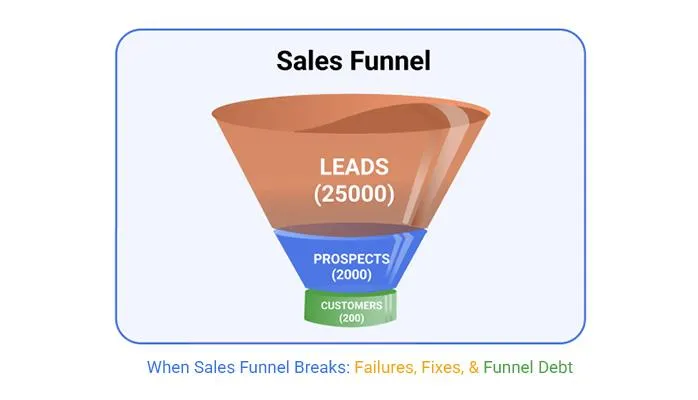
Funnel Mistakes That Kill Conversions
A sales funnel can generate leads, nurture prospects, and drive consistent revenue — but only when it is built strategically.
Many businesses invest heavily in advertising, landing pages, websites, and marketing campaigns, only to experience disappointing conversion rates because hidden funnel issues are preventing prospects from taking action.
The challenge is that most funnel problems are not immediately obvious.
A funnel can still attract traffic and generate leads while losing a significant percentage of potential customers due to poor messaging, weak automation, confusing user journeys, or ineffective follow-up systems.
At Lifestyle IND, we regularly help businesses identify and fix these conversion bottlenecks using proven funnel strategies, automation systems, and tools such as MyVault Software and ProLeadSniper.
In this guide, we'll explore some of the most common funnel mistakes that hurt conversions and how to avoid them.
Confusing Messaging

One of the fastest ways to lose a potential customer is through unclear messaging.
When someone lands on your page, they should instantly understand:
What you offer
Who it's for
What problem it solves
What action they should take next
Many businesses make the mistake of overwhelming visitors with:
Vague headlines
Industry jargon
Too much information
Unclear offers
Complicated explanations
If visitors need to work out what you're trying to say, most will leave before taking action.
Clear, simple messaging consistently outperforms complicated marketing language.
Weak Headlines

Your headline is often the first thing people notice.
A weak headline can dramatically reduce conversions before visitors even read the rest of the page.
Common headline mistakes include:
Being too generic
Focusing on features instead of outcomes
Trying to be clever rather than clear
Failing to address a specific problem
Strong headlines clearly communicate value and help visitors quickly determine whether the offer is relevant to them.
Too Many Steps in the Funnel
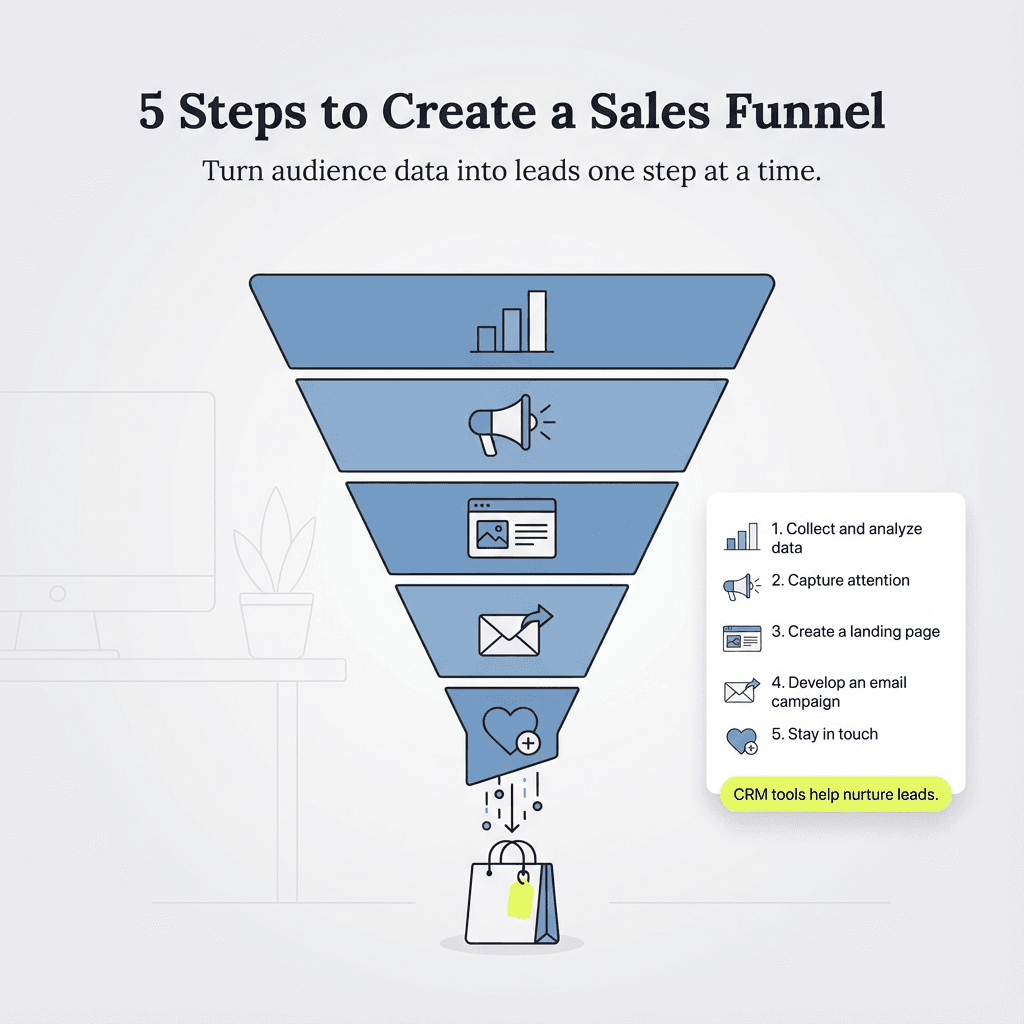
Every additional step creates friction.
Many businesses unintentionally make their funnels harder to complete by adding:
Multiple unnecessary pages
Long forms
Excessive qualification questions
Complicated booking processes
Lengthy checkout experiences
The easier it is for a prospect to move from interest to action, the higher your conversion rates are likely to be.
Successful funnels remove obstacles rather than adding them.
Poor Mobile Experience
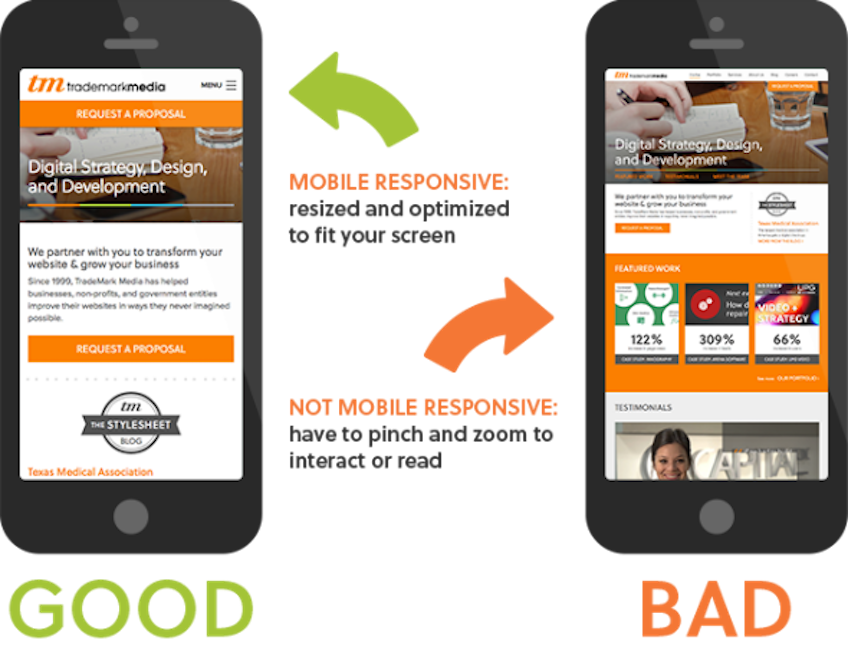
With the majority of online traffic now coming from mobile devices, mobile optimisation is no longer optional.
Common mobile funnel issues include:
Slow-loading pages
Difficult navigation
Poorly positioned buttons
Broken layouts
Forms that are difficult to complete
A funnel that performs well on desktop but poorly on mobile can lose a substantial percentage of potential customers.
Every funnel should be tested across smartphones, tablets, and desktop devices before launch.
Slow Page Speed
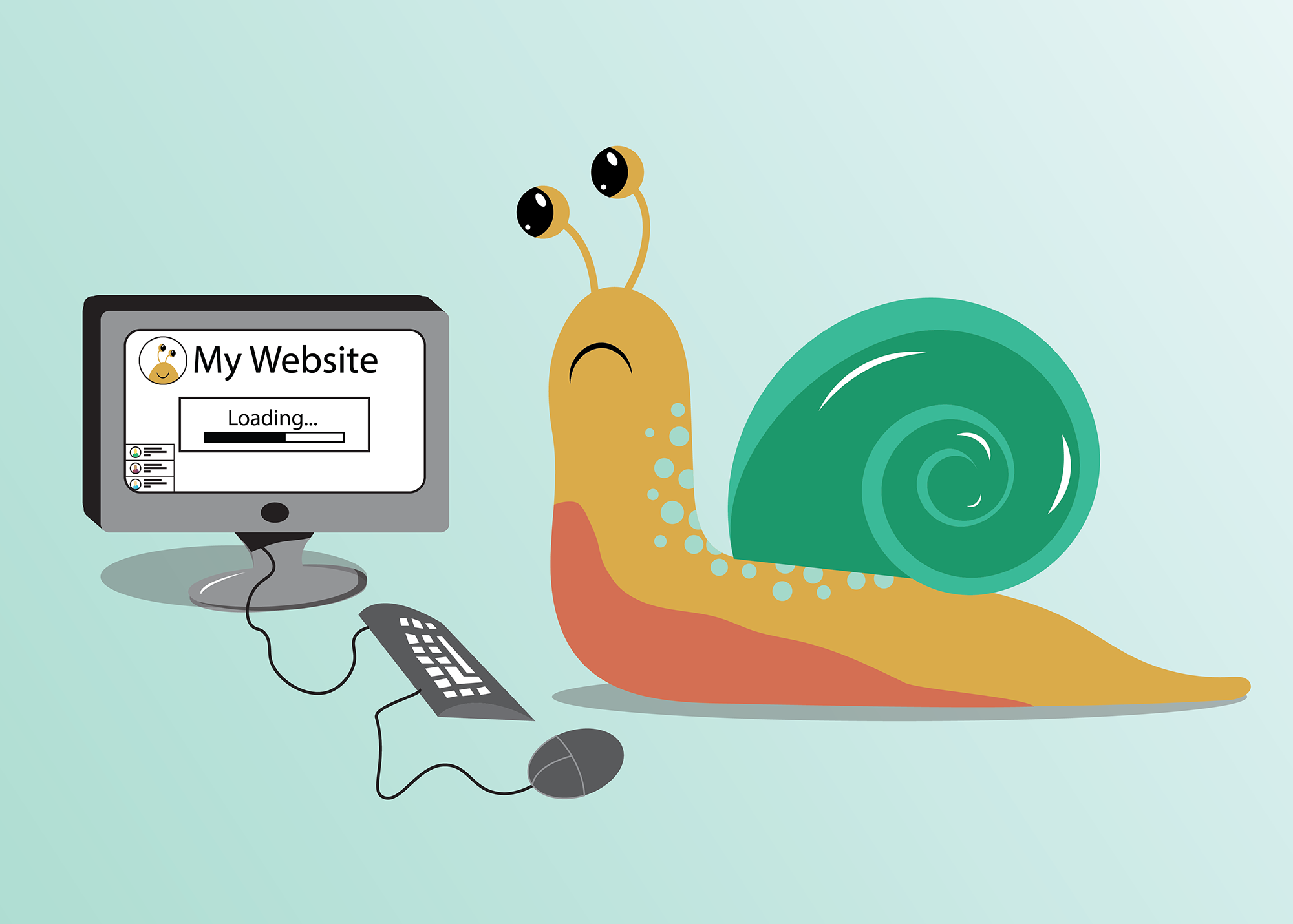
Page speed directly impacts user experience and conversion rates.
Visitors expect websites to load quickly. If a page takes too long to load, many users will leave before engaging with your offer.
Common causes of slow funnel performance include:
Oversized images
Excessive scripts
Poor hosting
Unnecessary animations
Bloated page builders
Improving page speed often produces immediate improvements in engagement and conversions.
Weak Calls to Action
Your call-to-action (CTA) should make it obvious what happens next.
Visitors should never have to guess:
Where to click
What action to take
What outcome to expect
Strong CTAs are:
Clear
Direct
Action-focused
Highly visible
Examples include:
Book Your Strategy Call
Start Your Free Trial
Get Your Free Guide
Request a Demo
The clearer the next step, the more likely prospects are to take it.
Asking for Too Much Information
Long forms often create unnecessary friction.
Many businesses ask for information they don't actually need during the initial conversion stage.
Examples include:
Full addresses
Extensive questionnaires
Multiple contact numbers
Detailed qualification forms
The more fields a visitor must complete, the more likely they are to abandon the process.
Only collect the information required to move the conversation forward.
Lack of Trust Signals
Trust plays a major role in every purchasing decision.
If visitors don't feel confident in your business, they are unlikely to convert.
Effective trust-building elements include:
Testimonials
Case studies
Reviews
Client success stories
Security indicators
Industry credentials
These elements help reduce uncertainty and reassure prospects that they're making the right decision.
Poor Offer Positioning
Sometimes the funnel isn't the problem.
The offer itself may not be compelling enough.
Visitors need to clearly understand:
The problem being solved
The outcome being delivered
Why your solution is different
Why they should act now
Strong offers focus on transformation, results, convenience, and value rather than simply listing features.
No Lead Nurturing System
One of the biggest funnel mistakes businesses make is assuming every lead is ready to buy immediately.
Most prospects need multiple touchpoints before making a decision.
Without a nurturing system in place, valuable leads often disappear.
Effective lead nurturing may include:
Email sequences
SMS reminders
Follow-up campaigns
Educational content
Appointment reminders
This is where automation becomes critical.
Platforms such as our MyVault Software help businesses automatically capture, organise, and nurture leads through customised workflows, ensuring opportunities don't fall through the cracks.
MyVault Software was designed to help businesses streamline these processes by combining funnel management, CRM functionality, automation, and customer communication in one platform.
No Lead Management Process
Generating leads is only part of the equation.
Many businesses struggle because they lack a structured process for managing enquiries once they enter the funnel.
Without proper systems, leads can be:
Forgotten
Delayed
Mishandled
Lost to competitors
A centralised CRM allows businesses to track every lead, monitor conversations, manage opportunities, and automate follow-up activities.
Overwhelming Design
Many funnels try too hard visually.
Overdesigned pages often become distracting and difficult to navigate.
Common design mistakes include:
too many colours
excessive animations
cluttered layouts
multiple competing sections
poor visual hierarchy
Effective funnel design usually prioritises:
clarity
simplicity
readability
user flow
A clean design often converts better than an overly complicated one.
Ignoring Lead Generation Quality
A funnel is only as effective as the quality of traffic entering it.
Many businesses focus solely on increasing traffic volume without considering whether the traffic is actually qualified.
Using targeted lead generation tools such as ProLeadSniper allows businesses to identify and connect with ideal prospects more effectively, improving the overall performance of their sales funnels.
Higher-quality leads generally result in:
Better engagement
Higher booking rates
Improved conversion rates
Greater return on marketing investment
Weak Follow-Up Timing
Speed matters.
Research consistently shows that businesses that follow up quickly are significantly more likely to convert leads.
Delays create opportunities for competitors to step in first.
Automation can help businesses:
Send instant confirmations
Deliver lead magnets automatically
Trigger nurture sequences
Schedule appointments
Follow up consistently
Fast, consistent communication creates trust and improves conversion performance.
Many businesses build a funnel and never revisit it.
However, even high-performing funnels require ongoing optimisation.
Testing can reveal opportunities to improve:
Headlines
CTAs
Images
Layouts
Offers
Form length
Pricing presentation
Small adjustments often lead to significant improvements in conversion rates over time.
Focusing Only on Traffic
More traffic does not automatically mean more sales.
Driving additional visitors into a poorly optimised funnel simply increases wasted marketing spend.
Before scaling advertising campaigns, businesses should focus on improving:
Conversion rates
Follow-up systems
Lead nurturing
User experience
Funnel performance
Optimisation usually delivers a stronger return than simply increasing traffic volume.
The Psychology Behind High-Converting Funnels

Successful funnels are built around human behaviour.
Every visitor subconsciously evaluates:
Trust
Risk
Value
Effort
Credibility
Relevance
High-converting funnels reduce friction and make decision-making easier.
This is why elements such as:
Clear messaging
Social proof
Automation
Consistent follow-up
Simple user journeys
play such a critical role in conversion success.
Funnels are not just marketing tools — they are systems designed to guide prospects through a buying journey.
Final Thoughts
Many funnel conversion problems stem from small issues that create friction throughout the customer journey.
The most effective funnels are not necessarily the most complex. They are the ones that communicate clearly, build trust, automate follow-up, and guide prospects towards action with minimal resistance.
By improving areas such as:
Messaging
Mobile optimisation
Page speed
Lead nurturing
Calls-to-action
CRM management
Automation workflows
businesses can dramatically improve conversion rates without constantly redesigning their entire marketing strategy.
At Lifestyle IND, we help businesses build smarter sales and marketing systems through automation, lead generation, funnel optimisation, and tools like MyVault Software and ProLeadSniper — creating streamlined customer journeys that convert more leads into long-term customers.